
Why Your Skin May Suddenly Stop Tolerating Products
Have you ever used the same skincare product for months, even years, without a single problem, and then one day it suddenly starts burning, stinging, drying you out, or triggering breakouts?
Your first thought is probably, “What happened? My skin used to love this.”
That's a fair question. But your skin doesn't necessarily develop a sudden grudge against a product for no reason. More often, there's something else going on around it. You may be dealing with more irritation than your skin can comfortably handle, combining several active ingredients, using something more frequently than you used to, or going through a change in weather or another environmental factor.
Sometimes the product really is the problem. The challenge is figuring out whether it's the product itself or the bigger picture.
Your Skin Has A Limit
Think of irritation like a bucket. One small irritant might not cause a noticeable problem on its own. But then you add more frequent exfoliation, a retinoid, washing your face more often, drier weather, hotter showers, or heavier makeup. Eventually, that bucket can start to overflow.
When your skin suddenly feels tight, dry, or irritated, it's tempting to blame the last product you used. But irritation can build from a combination of exposures rather than one single product. Repeated exposure to different irritants can have a cumulative effect, particularly when the skin doesn't have enough opportunity to recover.
That's one reason a product can feel perfectly fine at one point and become uncomfortable later, even though the formula itself hasn't changed.

"But I've Used It Forever."
This is one of the most common questions I hear: How can I suddenly react to something I've used for years?
Sometimes the answer is that the product isn't the only thing that's different.
Maybe you added another active. Maybe you've started exfoliating more frequently. Maybe you're layering products you weren't using before. Or perhaps the weather changed and your skin is already dealing with more dryness.
Your skin doesn't experience each product in isolation. It experiences your entire routine and environment together.
The American Academy of Dermatology cautions that combining exfoliating products with other products that increase sensitivity or dryness can raise the risk of irritation. So instead of asking only, “Is this product bad for me?”, it can be more useful to ask, “What is my skin being exposed to right now as a whole?”
More Actives Can Mean More Irritation
This is where skincare can get complicated quickly.
You have one product for acne, another for texture, another for dark spots, another for fine lines, plus an exfoliant and maybe a weekly mask because someone online recommended one.
Each product might have a legitimate purpose on its own. But stacking them doesn't automatically create a better routine.
The AAD notes that using multiple products with exfoliating or otherwise irritating ingredients can increase dryness and irritation. That doesn't mean you need to avoid active ingredients altogether. It means your skin still has to tolerate the entire routine you're asking it to handle.
More isn't automatically better.
Frequency Matters, Too
Sometimes the product didn't change. Your use of it did.
Maybe you went from using an exfoliant three times a week to every night. Maybe you started leaving a mask on longer. Or perhaps you began layering two products with similar effects because you assumed that using both would give you faster results.
Skin doesn't always agree with that logic.
With exfoliation specifically, the AAD recommends choosing an approach suited to your skin type and avoiding over-exfoliation, which can leave skin red and irritated. The same principle applies more broadly: don't just pay attention to what you're using. Pay attention to how often you're using it and what else you're using alongside it.
Your Environment Can Change the Equation
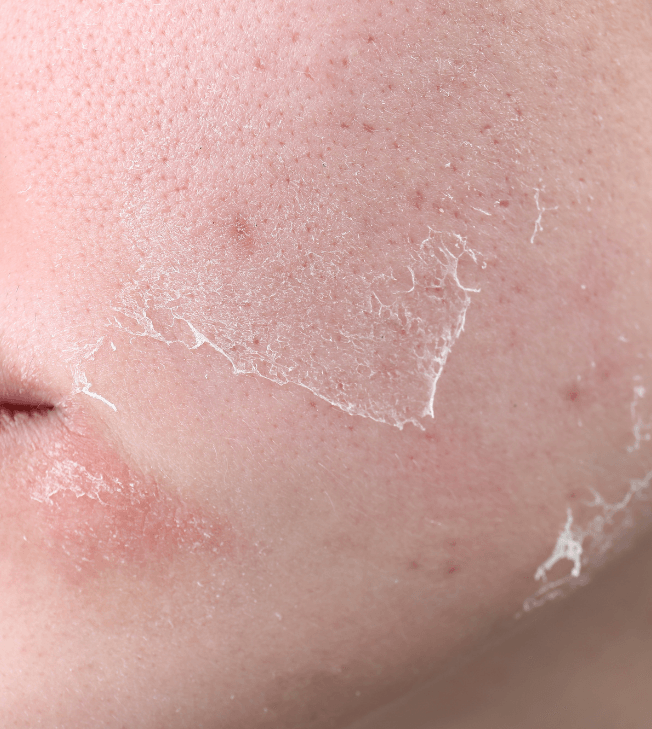
Skincare doesn't happen in a vacuum. Your skin is also responding to temperature, humidity, sun exposure, wind, indoor heating or cooling, sweat, friction, cleansing, makeup, and everything else that comes into contact with it throughout the day.
This becomes especially noticeable when the seasons change. A routine that felt comfortable during a humid summer can suddenly feel different when the air becomes cooler and drier. That doesn't necessarily mean your favorite moisturizer stopped working. Your skin may simply be dealing with a different environment.
It's another reason why “I've always used this” doesn't tell us the whole story.
Irritation Isn't the Same as an Allergy
This distinction is important.
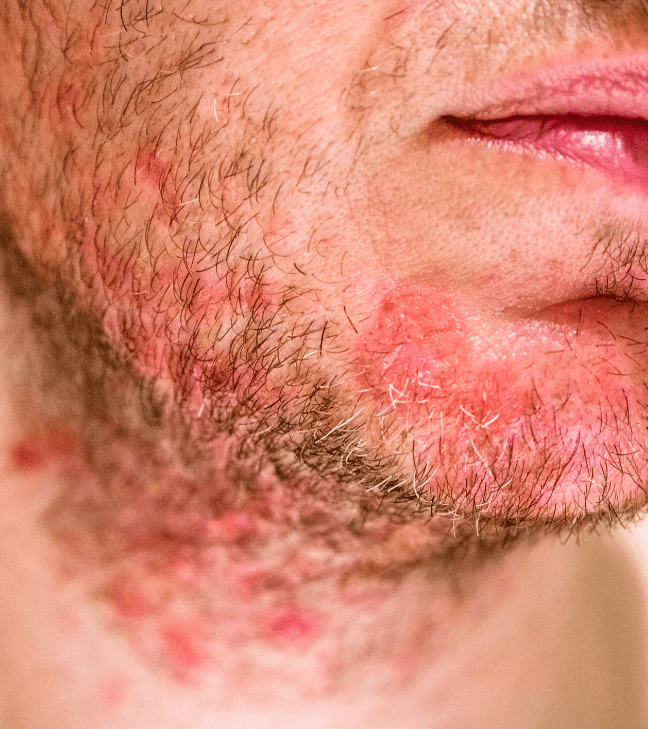
Sometimes a product simply irritates the skin. Other times, someone develops allergic contact dermatitis, where the immune system reacts to a particular substance. These aren't the same mechanism, even though they can produce some similar symptoms.
Contact dermatitis can cause itching, burning, stinging, redness, dryness, swelling, or a rash. And here's the part that surprises people: developing a reaction isn't necessarily ruled out just because you've tolerated a product in the past. The AAD notes that contact dermatitis can result from exposure to products and everyday substances you've used before.
So if a persistent rash suddenly appears, don't assume you should simply push through it because you've used the product for years.
Burning Isn't Proof That a Product Is Working
Let's address this one directly because it's easy to normalize.
“It tingles, so it must be working.”
Not necessarily.
A sensation doesn't automatically mean a product is effective, and persistent burning or stinging shouldn't be treated as proof that an ingredient is doing its job.
The AAD notes that sensitive skin may sting or burn with product use and recommends adjusting exfoliation based on skin type and tolerance. If your skin is consistently burning, becoming increasingly red, or feeling raw, that's a reason to step back and reassess rather than simply pushing through the discomfort.
So What Should You Do When Your Skin Suddenly Reacts?
Don't panic, and don't immediately clear out your entire bathroom cabinet.
Start with a little detective work.
Look at what changed.
Don't just think about your moisturizer. Consider everything touching your skin: cleanser, serum, retinoid, exfoliant, mask, sunscreen, makeup, hair products that brush against your face, and even laundry products.
Something doesn't have to be labeled “skincare” to be relevant.
Look at how often you're doing things.
Did your routine become more aggressive? Are you exfoliating more frequently, layering more actives, cleansing more often, or taking longer and hotter showers?
Sometimes the product isn't new. The exposure is.
Look at what your skin is actually doing.
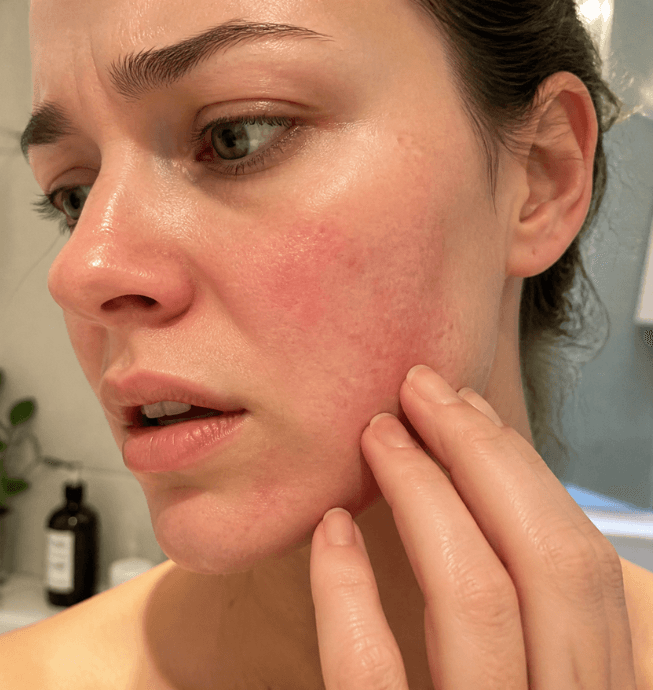
Burning, stinging, itching, tightness, flaking, redness, swelling, breakouts, and a persistent rash can all point to different possibilities. It could be irritation, a possible allergic reaction, acne, an inflammatory skin condition, or something else entirely.
You don't want to diagnose the cause based on one symptom, but a pattern is worth paying attention to.
Don't Change Five Things at Once
This is one of my favorite pieces of skincare advice:
If you change everything, you learn nothing.
Imagine your skin suddenly becomes irritated, so you swap your cleanser, buy a new moisturizer, add a soothing serum, stop your retinoid, introduce a mask, and start exfoliating to get rid of the dry skin.
Now your skin is reacting to an entirely different routine, and you have no way of knowing what actually caused the original problem.
When possible, simplify and make one thoughtful change at a time. That gives your skin a chance to settle and gives you a much better opportunity to understand what actually happened.
Sometimes the Product Really Is the Problem
I also don't want to swing too far in the other direction and suggest that every reaction is simply the result of an overly complicated routine.

Sometimes a specific ingredient genuinely is irritating your skin. Sometimes an allergic reaction has developed.
If a rash keeps appearing after you use a particular product, or your reaction is persistent or significant, that's worth discussing with a dermatologist. When the cause isn't obvious, they may recommend temporarily stopping certain products or using patch testing to identify an allergic contact trigger.
That's very different from endlessly guessing which ingredient is responsible and replacing products over and over again.
Your Skin Isn't “Rejecting” Skincare
This might be the bigger takeaway.
When a product suddenly stops feeling good, resist the urge to conclude that your skin has become impossible to please. Your skin isn't failing you, and you don't necessarily need an entirely new routine.
Instead, ask yourself what changed. Look at what you're using, how often you're using it, what else is touching your skin, what your environment looks like, and what symptoms are actually showing up.
Those questions can give you much more useful information than immediately reaching for another product.
Sometimes Skin Needs Less, Not More
Skincare can easily turn into a cycle of adding.
Your skin feels dry, so you add something.
You notice breakouts, so you add something else.
You see texture, so you exfoliate.
Then you notice redness and add another product to calm it down.
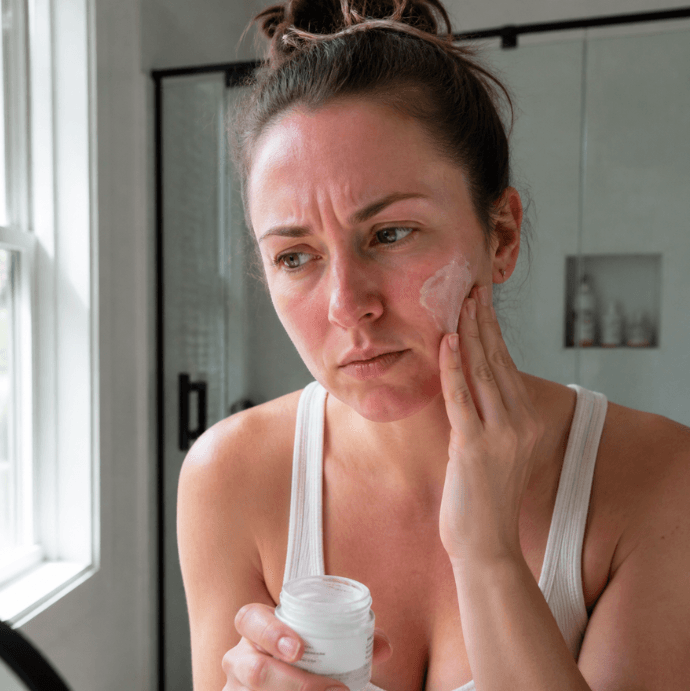
Eventually, your skin is being asked to tolerate an entire chemistry experiment morning and night.
A thoughtful routine doesn't have to be complicated. Sometimes the smartest move is to simplify, pay attention, and give your skin room to settle.
The goal was never to create the most powerful routine possible.
It's to create a routine your skin can actually tolerate and that fits your real life.
The Next Time a Product Starts Bothering Your Skin
Don't jump straight to “What should I replace it with?”
Ask “What changed?” first.
That question can lead you toward the real answer much faster. Maybe the product is the problem. Maybe something else in your routine is contributing to the irritation. Maybe your environment has changed. Or maybe your skin simply needs a little less happening at once.
Understanding that bigger picture is often more useful than adding another bottle to the shelf.
Your skin isn't asking for the most complicated routine.
It's asking you to pay attention.
Start TAIMing your skin.
Calm your skin, reclaim your comfort, and embrace a healthier, more balanced life.



Get in touch
Feel free to get in touch with us via email: support@theantiinflammatorymindset.com
TAIM | Privacy Policy | Terms and Conditions