
Why Over-Treating Your Skin Can Sometimes Make Things Worse
You notice a new breakout, so you reach for a spot treatment. Your skin feels rough, so you exfoliate. A few days later, you're still breaking out, so you add another active ingredient. Then your skin starts stinging, and suddenly, you're shopping for something to calm it down.
Sound familiar?
We've become so accustomed to treating every little skin change as something that needs fixing right away. But sometimes, in trying to do more for our skin, we end up making things worse.
The truth is, more skincare doesn't always mean better skincare.
Your Skin Doesn't Need Everything at Once
There's a product for just about every skin concern: acne, dark spots, uneven texture, fine lines, redness, dryness, and clogged pores. Having products that serve different purposes isn't necessarily a problem. The trouble starts when we're trying to address several concerns at once without considering how those products work together.
The American Academy of Dermatology cautions that using too many skincare products, especially those containing active ingredients, can irritate the skin. And once irritation sets in, it becomes much harder to tell which products are helping and which ones might be making things worse.

More Exfoliation Doesn't Always Mean Better Results
This is a big one. Exfoliation has its place in skincare, but there's a point where doing more stops being beneficial.
Using exfoliating acids, physical scrubs, brushes, or other treatments too frequently can leave skin red, irritated, and uncomfortable. The frequency and intensity of exfoliation should depend on your skin type and the method you're using. Combining multiple exfoliating products with other potentially irritating treatments can make matters worse.
So if your skin looks flaky, the answer isn't automatically to scrub everything away. Sometimes those flakes are a sign that your current routine is already doing too much.
An Effective Acne Treatment Can Still Cause Irritation
Here's something worth understanding: a skincare treatment can be effective and still cause irritation.
Topical retinoids are a good example. They're widely used to treat acne and other skin concerns, but they can also cause dryness, redness, itching, and stinging, particularly when first introduced.
That's why gradually introducing certain active ingredients or adjusting how frequently you use them can make a difference in how well your skin tolerates them.
It doesn't mean you should stop a treatment just because your skin feels a little different. It means understanding that using more won't necessarily speed up results. Your skin has its own tolerance level, and finding the right balance is part of building a routine you can maintain.
Sometimes You're Treating the Reaction to Your Own Routine
This is where things can get frustrating.
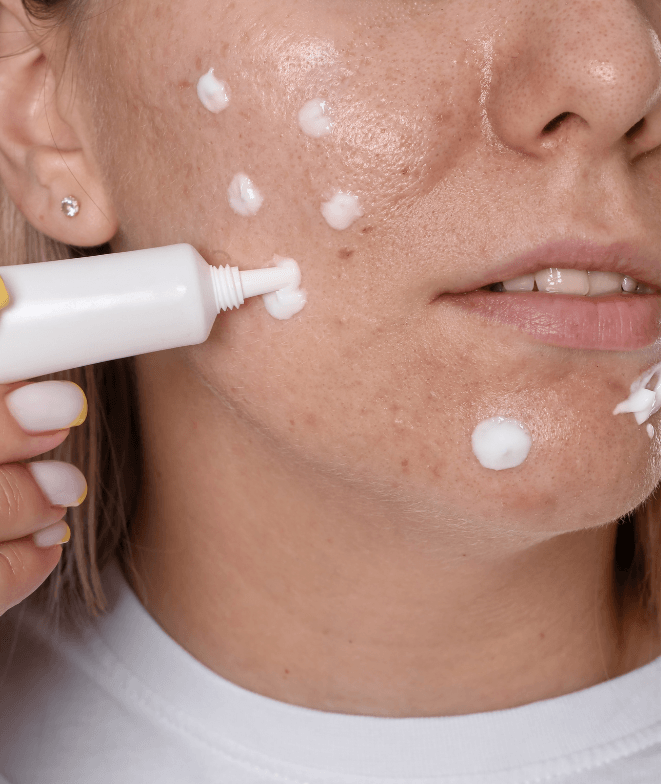
You introduce an active ingredient to help clear your skin. Then that product causes irritation. Your skin becomes dry and uncomfortable, so you add a calming moisturizer. A few days later, you notice more texture, so you start exfoliating again.
Before you know it, you're treating the irritation caused by the very routine you created to address your original skin concern.
It's a cycle that's easy to fall into without realizing it.
This is one reason dermatologists often recommend keeping routines relatively simple and introducing new products thoughtfully rather than changing several things at once.
Sometimes Your Skin Needs Less, Not More
Think about it this way: if you introduce five new products and your skin improves, how do you know which one made the difference?
And if your skin gets worse, which product do you suspect?
That's why introducing one new product or major change at a time is so helpful. It gives you a better opportunity to observe how your skin responds and identify potential irritants if something doesn't go as expected.
This is especially important if you already have sensitive or reactive skin, or if a routine that once worked suddenly isn't working the same way.
Natural Doesn't Automatically Mean Gentle
Another common misconception is that switching to natural skincare will automatically solve irritation.
Not necessarily.
Essential oils and botanical ingredients can still irritate the skin or trigger allergic reactions in certain individuals. Just because a product is labeled natural, clean, or gentle doesn't mean it's automatically suitable for everyone.
Instead of focusing only on where an ingredient comes from or how a product is marketed, pay attention to how your skin actually responds to it.
What works beautifully for someone else might not work for you.
Stop Trying to Fix Every Little Skin Change
Your skin isn't going to look exactly the same every morning. You might wake up with a new pimple, notice a little redness, experience some dryness, or see that your skin looks a bit dull.
That doesn't automatically mean your entire routine needs an overhaul.
Skin naturally fluctuates, and not every change requires a new treatment.
Before reaching for another product, take a moment to ask yourself whether you're dealing with an ongoing concern that needs attention or simply noticing a temporary change.
Sometimes, that little pause can prevent a minor skin issue from turning into a much bigger skincare problem.
What If Your Skin Is Already Overwhelmed?
If your skin is burning, stinging, unusually dry, peeling excessively, or becoming increasingly irritated, this probably isn't the time to introduce another active ingredient.
Instead, take a step back and look at your current routine.
Consider which products you're using, whether some contain overlapping active ingredients, and whether you've gradually increased how often you're applying them.
The AAD recommends reducing or stopping irritating exfoliation practices when skin becomes overly irritated and using moisturizer to help support the skin.
If you're using prescription treatments, talk to your prescribing clinician before making significant changes. And if irritation persists or becomes severe, a dermatologist can help determine whether you're experiencing treatment-related irritation, contact dermatitis, an underlying skin condition, or something else.
The goal is to understand what's happening rather than continue adding products in hopes that something will fix it.

A Simpler Routine Doesn't Mean You're Doing Nothing
This is where skincare culture can be confusing. With so many products, ingredients, and routines being promoted online, using fewer products can sometimes feel like you're not doing enough.
But simplifying your routine can actually make it easier to understand what your skin needs.
For some people, that might mean a gentle cleanser, a moisturizer their skin tolerates well, daily sun protection, and a prescribed treatment when needed.
That's not giving up on your skin. It's creating consistency and giving your skin a chance to respond without introducing unnecessary irritation.
Before Adding Another Product, Ask Yourself These Questions
Before buying that next serum or adding another exfoliant, consider:
What am I actually trying to treat? Be specific about the concern rather than reacting to every little change.
Do I really need another product? Or am I responding to something temporary?
What am I already using? Look at your entire routine, not just the newest product you're thinking about buying.
Am I layering ingredients with similar effects? Multiple products with overlapping active ingredients can increase the risk of irritation.
Have I given my current treatment enough time? Some skincare ingredients need consistent use over time before you can fairly evaluate their results.
What is my skin telling me? Persistent redness, burning, significant peeling, and discomfort deserve attention rather than another layer of treatment.
These questions can help you make more intentional skincare decisions instead of constantly chasing the next solution.
Skincare Isn't a Competition
There are no extra points for having a twelve-step skincare routine. You don't need every trending ingredient, and you don't have to address every pore, fine line, breakout, or dark spot all at once.
Sometimes, the most helpful thing you can do is stop adding products and start paying attention.
The goal isn't to do the most for your skin. It's to understand what actually helps your skin specifically. And that might look very different from the routine you're seeing online.
So before buying another serum, adding another exfoliant, or deciding your entire routine needs an overhaul, take a moment to pause.
Ask yourself what you're really trying to solve. Then give your skin the consistency and time it needs to show you how it's responding.
More isn't always better. Sometimes, understanding your skin is the best place to start.

Calm your skin, reclaim your comfort, and embrace a healthier, more balanced life.



Get in touch
Feel free to get in touch with us via email: support@theantiinflammatorymindset.com
TAIM | Privacy Policy | Terms and Conditions