
Halloween Skin: What Face Paint, Makeup & Costumes Can Mean for Sensitive Skin
Halloween is one of those times when your usual skincare routine can look a little different. Heavy makeup, face paint, glitter, special-effects products, costume masks, and maybe even colored contacts can all become part of the fun.
But if you have sensitive, acne-prone, rosacea-prone, or eczema-prone skin, you might be wondering:
Can I enjoy the Halloween makeup and still keep my skin happy afterward?
The good news is that you don't have to skip the fun. But a little planning can go a long way, especially when you're putting products on your skin that you don't normally use.
Halloween Makeup Is Still Makeup
The good news is that you don't have to skip the fun. But a little planning can go a long way, especially when you're putting products on your skin that you don't normally use.
The skin around your eyes is delicate, and products meant for other areas shouldn't automatically go there. The FDA specifically recommends checking that makeup is appropriate for its intended use and advises against using cosmetics near the eyes unless they're designed for that purpose. That dramatic black-and-red look might be perfect for your costume. It doesn't mean every black-and-red product belongs near your eyes.

"But I've Never Reacted To Makeup Before"
That's great, but it doesn't guarantee every new Halloween product will behave the same way. Contact dermatitis can happen when something irritates skin or triggers an allergic reaction, causing itching, burning, stinging, redness, swelling, dryness, or a rash, and the reaction isn't always immediate.
That's one reason the FDA recommends testing Halloween makeup ahead of time instead of waiting for the night you're supposed to wear it. Their Halloween guidance suggests applying a small amount to your arm 24 to 48 hours beforehand and watching for redness, swelling, rash, or other irritation. Which brings me to one of my favorite Halloween skincare rules: don't make Halloween night the first time your skin meets your costume makeup.
Your Skin Doesn't Know It's Halloween
Your skin just experiences whatever gets put on it, whether that's new face paint, heavy foundation, glitter, adhesives, fake blood, prosthetic materials, a costume mask, body makeup, hair products, fragrance, sweat, or friction. Any one of those might be totally fine for you, or one might become a problem. And if you're layering several new products at once, figuring out which one your skin didn't like gets a lot harder.
Think About The Whole Costume, Not just the Makeup
Sometimes the makeup gets blamed when the real issue is friction or occlusion. A mask rubbing against your face for several hours is a very different experience than wearing normal makeup for an hour or two. A tight collar can rub your neck. A hat can trap sweat. A wig can create heat and friction around the hairline. Straps and accessories repeatedly touch the same spots. Add heat, sweat, friction, makeup, and several hours of wear together, and that's a lot for already-reactive skin to handle.
That doesn't mean skipping the costume. It means thinking about where your skin is making contact with it, and for how long.

Be Especially Careful Around Your Eyes
This deserves its own section. Halloween is when people are far more likely to experiment with dramatic eye makeup, glitter, adhesives, and decorative contact lenses, but your eyes aren't the place to improvise. The FDA recommends using eye cosmetics only as intended, and specifically advises against decorative contact lenses that haven't been prescribed and properly fitted by an eye-care professional.
So if your costume depends on colored contacts, skip the random pair from a costume shop just because it looks cool. Your costume is temporary. An eye injury isn't.
What About Glitter?
Glitter makes a look. Where and how you use it matters more than that. If a product is going near the eyes, make sure it's specifically intended for that area, and be cautious with adhesives and special-effects products that weren't actually designed as cosmetics. Costume use doesn't automatically mean skin-safe use. Read the label and follow its intended use.
Don't Forget About Acne-Prone Skin
Wearing makeup doesn't automatically mean breaking out, but how it's applied, worn, and removed matters. The American Academy of Dermatology recommends applying makeup gently, removing it before bed, washing with a gentle cleanser, and cleaning makeup brushes regularly.
Halloween makes this harder since you're likely wearing more makeup than usual and keeping it on longer. Maybe you get home late, you're exhausted, and you think "I'll take it off in the morning." Please don't. Your tired future self will thank you.
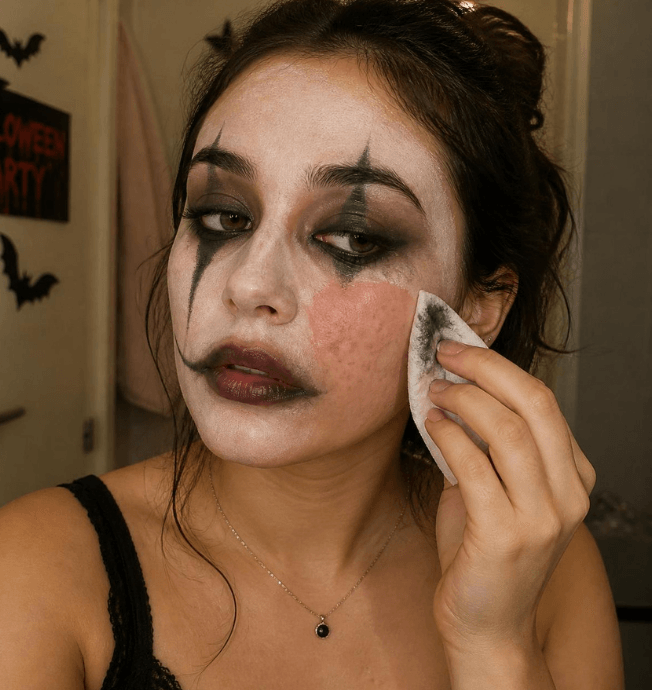
And Please Don't Scrub Trying To Get It All Off
This is another Halloween trap. You spent an hour building the perfect vampire, skeleton, fairy, or zombie look. You get home and realize this makeup is not coming off easily. So you scrub, and scrub, and scrub some more. The makeup's gone, but your skin is red and somehow looks angrier than your costume did.
If you need to remove heavy makeup, be gentle about it. The AAD recommends avoiding scrubbing during removal and sticking with a gentle cleanser. You don't need to punish your skin for enjoying Halloween.
Don't Introduce Ten New Products The Same Night
New face paint, new primer, new foundation, new adhesive, new glitter, new setting spray, new makeup remover, that's a lot of variables at once. If something goes wrong, there's no way to know which product caused it, especially if your skin already tends to react to certain ingredients.
Read the labels, pay attention to anything you've reacted to before, and test unfamiliar products ahead of time rather than introducing them for the first time right before a big event.
What if your skin reacts anyway?
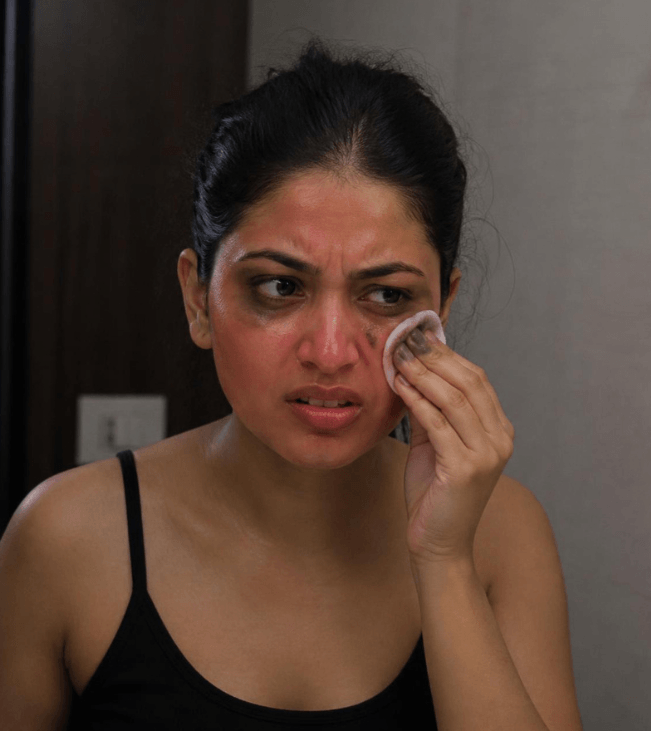
Let's say you do everything right and your skin still isn't loving the look. Burning, itching, redness, swelling, stinging, a rash, excessive dryness, or new irritation around the eyes or mouth can all show up. Don't assume you need to push through it because the party isn't over.
If a product appears to be causing a reaction, stop using it. The FDA advises stopping use of a cosmetic when you experience an unexpected reaction and contacting a healthcare provider for guidance, and if the reaction is significant, persistent, or involves your eyes, getting medical advice matters even more. Sometimes it's simple irritation, sometimes it's contact dermatitis, and sometimes a reaction has nothing to do with the Halloween makeup at all. Don't diagnose the cause off one night. Look at the pattern.
Your Halloween Skincare Plan Can Be Simple
You don't need an elaborate pre-Halloween routine. Think of it in three stages.
Before:
Know what you're putting on your skin. Read the label, use products for their intended purpose, test unfamiliar makeup ahead of time, and avoid introducing a bunch of new skincare right before Halloween.
During:
Pay attention to your skin. If something starts burning or causing real discomfort, that's not something to treat as normal. Take breaks from a mask if you can, stay mindful of friction, heat, and sweat, and keep products meant for other parts of the body away from sensitive areas like the eyes unless they're specifically designed for it.
After:
Take the costume off gently. Remove makeup before bed, skip the aggressive scrubbing, cleanse gently, and return to your usual routine rather than piling on new products trying to "fix" anything. If skin is irritated, give it time to settle.
You Don't Have To Choose Between Halloween And Your Skin
This is the part I really want you to remember. Having sensitive or inflammatory skin doesn't mean sitting out every fun occasion. You can dress up, wear makeup, go to the party, take the pictures, and actually enjoy it. You just might need to be a little more thoughtful about what's going on your skin and how you treat it afterward.
Healthy skin isn't about avoiding everything. It's about understanding what your skin can tolerate, recognizing when something isn't working, and knowing when to pay attention.
So before you paint your face this Halloween, don't just ask "does this complete my costume." Also ask "is this actually meant for my skin, and how is my skin likely to handle it." A little planning goes a long way, and yes, you can still have fun.
Calm your skin, reclaim your comfort, and embrace a healthier, more balanced life.



Get in touch
Feel free to get in touch with us via email: support@theantiinflammatorymindset.com
TAIM | Privacy Policy | Terms and Conditions