
The Gut-Skin Connection: Can Your Gut Health Really Affect Your Skin?
You've probably seen the claims.
"Your eczema starts in your gut."
"Clear skin begins with gut health."
"Your acne is a sign of gut imbalance."
"Detox your gut and your skin will clear."
There's a reason this topic has taken off. Researchers are studying the relationship between the gut, the immune system, the microbiome, and the skin, a field often called the gut-skin axis. But there's a big difference between saying a connection exists and saying your skin condition is caused by your gut. The science is far more nuanced than social media makes it sound.
What is the gut-skin axis?
The gut-skin axis describes the communication between the digestive system and the skin. It isn't one pathway or one mechanism. Researchers are looking at a complex, two-way relationship involving the gut microbiome, immune signaling, metabolic processes, and other biological pathways.
In simple terms, what happens in the gut may influence the skin, and what happens in the skin may connect to what's happening elsewhere in the body. It's one reason skin is increasingly viewed as more than an isolated organ, though we're still learning how all of these connections work.
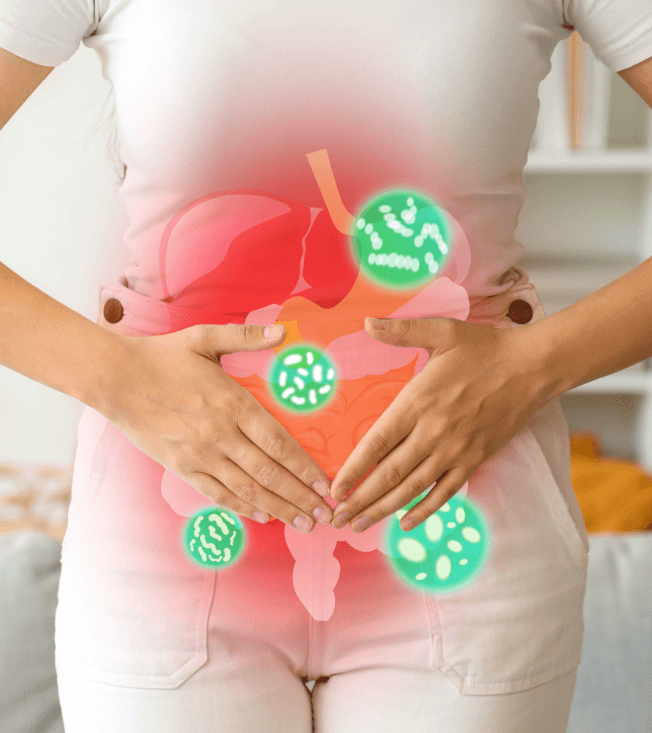
Your gut is home to trillions of microorganisms
Your digestive tract hosts an enormous community of bacteria and other microbes, collectively known as the gut microbiome. It isn't a simple matter of "good bacteria versus bad bacteria." It's a complex ecosystem, and its makeup is shaped by diet, medications, age, genetics, environment, and overall health.
The microbiome also interacts with the immune system, which is what makes it so interesting for inflammatory conditions. Studies have found associations between gut microbiome changes and several inflammatory skin conditions, including atopic dermatitis, psoriasis, and acne. But association doesn't prove causation.
Where the immune system comes in
The gut and the skin are both major barrier surfaces. Both interact with microorganisms, and both communicate with the immune system. Researchers are exploring how microbial communities and their metabolites may influence immune signaling and inflammatory pathways that reach the skin.
That helps explain why the gut-skin connection keeps getting investigated in conditions like eczema and psoriasis. It doesn't mean everyone with an inflammatory skin condition has an unhealthy gut, and it doesn't mean treating the gut will automatically treat the skin. That's where promising science needs to be separated from social media certainty.

What about eczema?
The gut-skin relationship has been studied extensively in atopic dermatitis. Some research has found differences in gut microbiome composition in certain people with eczema, and scientists are examining how those differences might interact with immune responses.
But the evidence isn't strong enough to say eczema is caused by an unhealthy gut. Eczema is a complex condition shaped by genetics, immune activity, skin barrier function, environment, and more. The gut microbiome may be one piece of that larger picture, which is very different from being the root cause for everyone.
What about acne and psoriasis?
The conversation extends beyond eczema. Research has identified associations between the gut microbiome and both acne and psoriasis. In psoriasis specifically, researchers are investigating how microbiome changes, microbial metabolites, intestinal barrier function, and immune signaling may interact with inflammatory pathways.
The research is still evolving, though. A 2025 review noted growing evidence around the gut-skin axis in psoriasis while pointing to real limitations, including a lack of standardized microbiome profiling and universally accepted biomarkers.
So is it interesting? Absolutely. Worth studying? Definitely. A reason to diagnose yourself with "gut dysbiosis" from an Instagram post? No.

Do digestive symptoms mean your skin issue starts in your gut?
Not necessarily. Bloating, constipation, diarrhea, reflux, and abdominal discomfort all have many possible causes, and having them doesn't automatically explain a skin condition. The reverse is true too: you can have an inflammatory skin condition with no obvious digestive symptoms at all.
That's why it's important not to squeeze a complicated health picture into one explanation. If you're dealing with persistent digestive symptoms alongside ongoing skin problems, that's worth discussing with a healthcare professional rather than trying to sort it out through food eliminations or online microbiome tests.

What about gut detoxes?
This is where extra caution is needed. The popularity of the gut-skin axis has fueled an entire industry of detoxes, cleanses, restrictive diets, and expensive supplements. But your body already has systems for processing and eliminating waste. You don't need a trendy cleanse to make your gut "clean," and a restrictive diet isn't automatically a healthier one.
Some people do benefit from dietary changes based on their individual health needs. That's a very different thing from telling everyone with eczema, acne, rosacea, or psoriasis to cut out gluten, dairy, sugar, nightshades, or dozens of other foods. Your skin deserves evidence, not fear.

Can nutrition support the gut-skin connection?
Yes, and you can take a practical approach without turning your diet upside down. Instead of starting with what to eliminate, think about what to add. A varied diet with plenty of nutrient-dense foods supports overall health and provides different kinds of fiber and other nutrients that interact with the gut microbiome.
Depending on your individual needs, that might include a variety of fruits and vegetables, fiber-rich foods, whole grains you tolerate well, legumes, nuts and seeds, healthy fats, adequate protein, and fermented foods if they agree with you. The goal isn't a "perfect gut diet." It's sustainable habits that support your health overall.

What about probiotics?
Probiotics, prebiotics, and other microbiome-targeted approaches are getting significant research attention for inflammatory skin conditions. Some studies show promising results, but findings aren't consistent enough to say one probiotic will work for everyone with a given condition.
Different strains have different effects, and dose, the individual, and the condition being studied all matter. Research results don't automatically become a recommendation for every person. If you're considering a probiotic specifically for your skin, it's worth talking it through with a qualified healthcare professional rather than assuming anything labeled "probiotic" will help.

Your gut isn't the only thing that matters
This may be the biggest takeaway. When you're dealing with a chronic or inflammatory skin condition, it's tempting to hunt for the one hidden cause. Maybe it's your gut, your diet, your skincare, stress, or your environment.
But skin health rarely comes down to one variable. Genetics, immune function, skin barrier health, environment, medications, skincare, lifestyle, and more can all play a part. The gut may be part of that picture. It doesn't have to be the entire picture.
What can you actually do?
You don't need to overhaul your life because you read about the gut-skin axis. Start with the basics.
Eat for overall health. Focus on variety and nutrient density instead of unnecessary restriction.
Prioritize fiber-rich foods. Fiber is a core part of a balanced diet and is relevant to the gut microbiome.
Skip the unnecessary cleanses. You don't need to "detox" your gut every time your skin flares.
Track your own patterns. If you consistently notice a link between a particular food or eating pattern and your symptoms, document it rather than immediately cutting half your diet.
Keep evidence-based skin care. A gut-focused approach shouldn't replace appropriate dermatologic treatment.
Get professional guidance when needed. Persistent digestive symptoms, significant dietary restriction, or ongoing skin problems deserve individualized care.
Promising, but not magic
We're learning more all the time about how the gut, microbiome, immune system, and skin communicate, and that research is genuinely exciting. But science doesn't need to promise a miracle to be useful. The gut-skin axis simply gives us another way to think about skin health: skin is connected to the rest of the body.
At the same time, it's worth resisting the urge to turn that idea into another oversimplified wellness trend. You don't need to fear your food, cleanse your gut, or buy every supplement promising better skin from within. Nourish your body, support your skin, pay attention to patterns, and remember that inflammatory skin conditions are complex.

The gut and skin communicate through complex pathways involving the microbiome, the immune system, and microbial metabolites. Researchers are finding associations between gut microbiome changes and several skin conditions, but many of the mechanisms and clinical applications are still being studied.
So yes, your gut may be part of your skin story. It just isn't necessarily the whole story, and understanding that difference lets you approach your skin with curiosity instead of fear.
This article is for educational purposes only and isn't a substitute for individualized medical advice, diagnosis, or treatment.

Calm your skin, reclaim your comfort, and embrace a healthier, more balanced life.



Get in touch
Feel free to get in touch with us via email: support@theantiinflammatorymindset.com
TAIM | Privacy Policy | Terms and Conditions