
Understanding Eczema Inflammation Pathways: How Your Body Creates Flare-Ups
Eczema isn’t “just dry skin.” It’s not simply an allergy or a rash that comes and goes at random.
Eczema is the result of complex inflammation happening deep within the skin—and sometimes throughout the body.
To truly understand why eczema flares, why it itches, and why treatments work (or don’t), it helps to understand the different inflammatory pathways involved. Once you see what your body is actually doing, everything from medication to lifestyle choices starts to make more sense.
What Is an Inflammatory Pathway?
Think of an inflammatory pathway like a chain reaction.
Something triggers the body—food, stress, allergens, dryness, microbes—and your immune system sends out specific signaling molecules to respond.
In eczema, certain pathways become overactive, sending the immune system into “alert mode” too often or too intensely.
This is what leads to:
Redness
Itching
Swelling
Dryness
Flare-ups that feel impossible to predict
Your skin is essentially saying:
“Something feels threatening. I’m trying to protect you.”
Understanding which pathways are involved helps us understand why treatments like moisturizers, lifestyle changes, or medications help calm things down.
The Key Inflammatory Pathways in Eczema
Below are the major pathways involved in eczema—explained in a simple, friendly way.
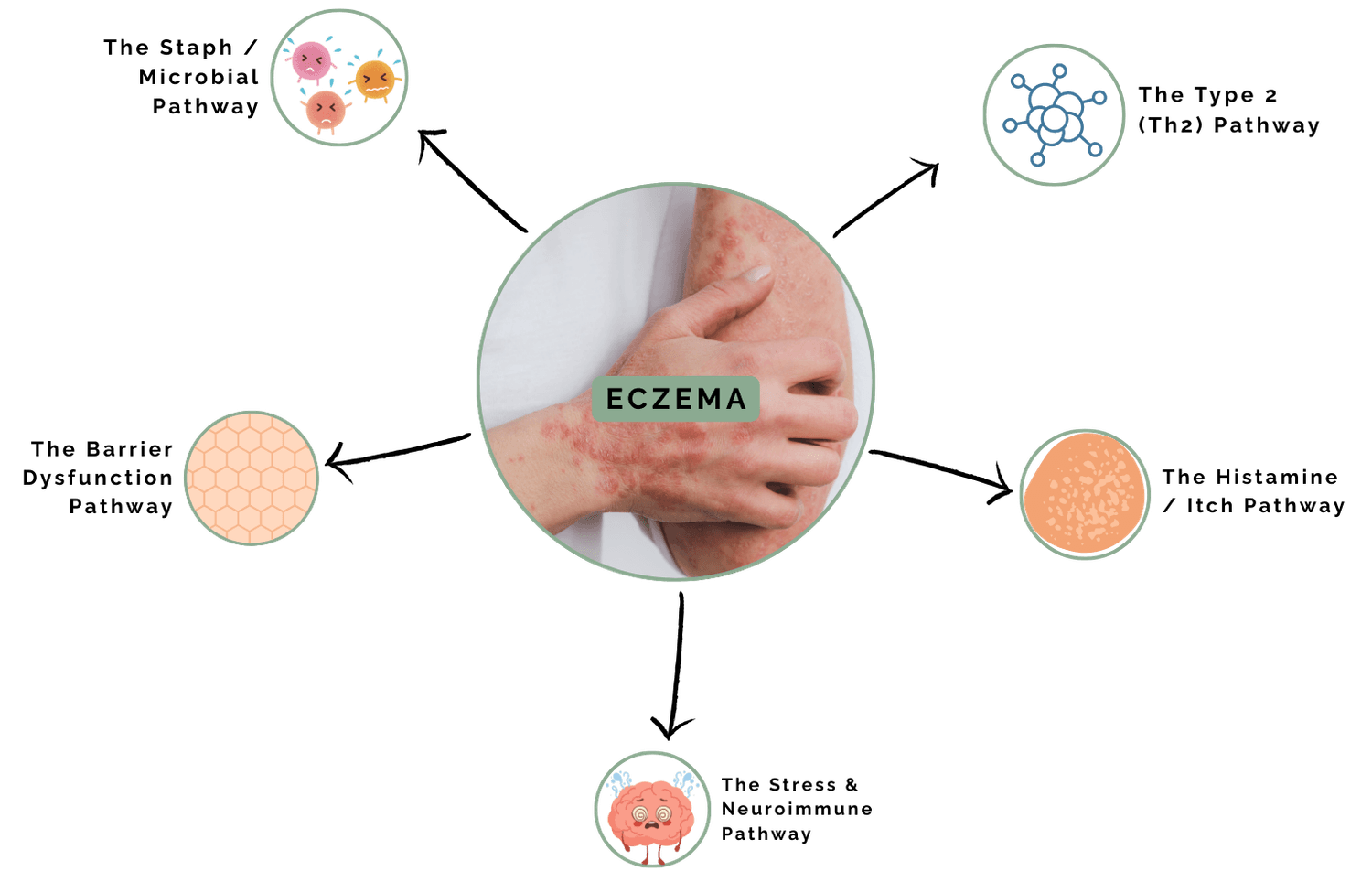
1. The Type 2 (Th2) Pathway – The Core Driver of Eczema
For most people with eczema, this is the main pathway behind inflammation.
This pathway is responsible for:
Allergies
High IgE levels
Hypersensitivity reactions
Itching
Skin barrier issues
In this pathway, key molecules—IL-4 and IL-13—send “inflammatory signals” that:
Weaken the skin barrier
Increase dryness
Make skin more reactive
Lower the skin’s ability to fight microbes
Trigger intense itching
This is why so many eczema treatments focus specifically on the Th2 pathway.
2. The Staph / Microbial Pathway – When Your Microbiome Is Out of Balance
People with eczema often have:
low diversity of good bacteria, and
overgrowth of harmful bacteria, especially Staphylococcus aureus.
This microbial imbalance triggers its own form of inflammation, further weakening the skin barrier and worsening flare-ups.
When this pathway is active, you may experience:
Burning
Oozing
Yellow Crusting
Repeated Infections
Flare-ups that return quickly
This is why supporting the skin microbiome matters so much.
3. The Barrier Dysfunction Pathway – When the Skin Cannot Protect Itself
This pathway is not just about irritation on the surface.
It’s a deeper issue.
Your skin barrier is supposed to hold in moisture and keep irritants out.
But with eczema, the barrier doesn’t produce enough natural oils, ceramides, or protective proteins.
This triggers inflammation through:
water loss (transepidermal water loss)
cracks in the barrier
increased sensitivity to soaps, fragrance, fabrics, foods, and temperature
A damaged barrier activates the immune system, creating more inflammation—a cycle many people get stuck in.
4. The Histamine / Itch Pathway – Why the Itch Feels Uncontrollable
Eczema itch isn’t “normal itch.”
It’s a neurological-inflammatory loop involving:
Histamine
Cytokines
Nerve Hypersensitivity
Inflammation makes the nerves more sensitive, causing more itching.
Scratching damages the skin barrier, which creates more inflammation.
This is the “itch–scratch cycle,” one of the most challenging parts of eczema.
5. The Stress & Neuroimmune Pathway – When Emotions Affect Your Skin
Stress activates cortisol and nervous system pathways that directly influence skin inflammation.
This pathway explains why flare-ups appear:
During exams
After emotional stress
When sleep is disrupted
During burnout
Your skin and nervous system are deeply connected.
Where Medications Like Dupixent Fit Into This
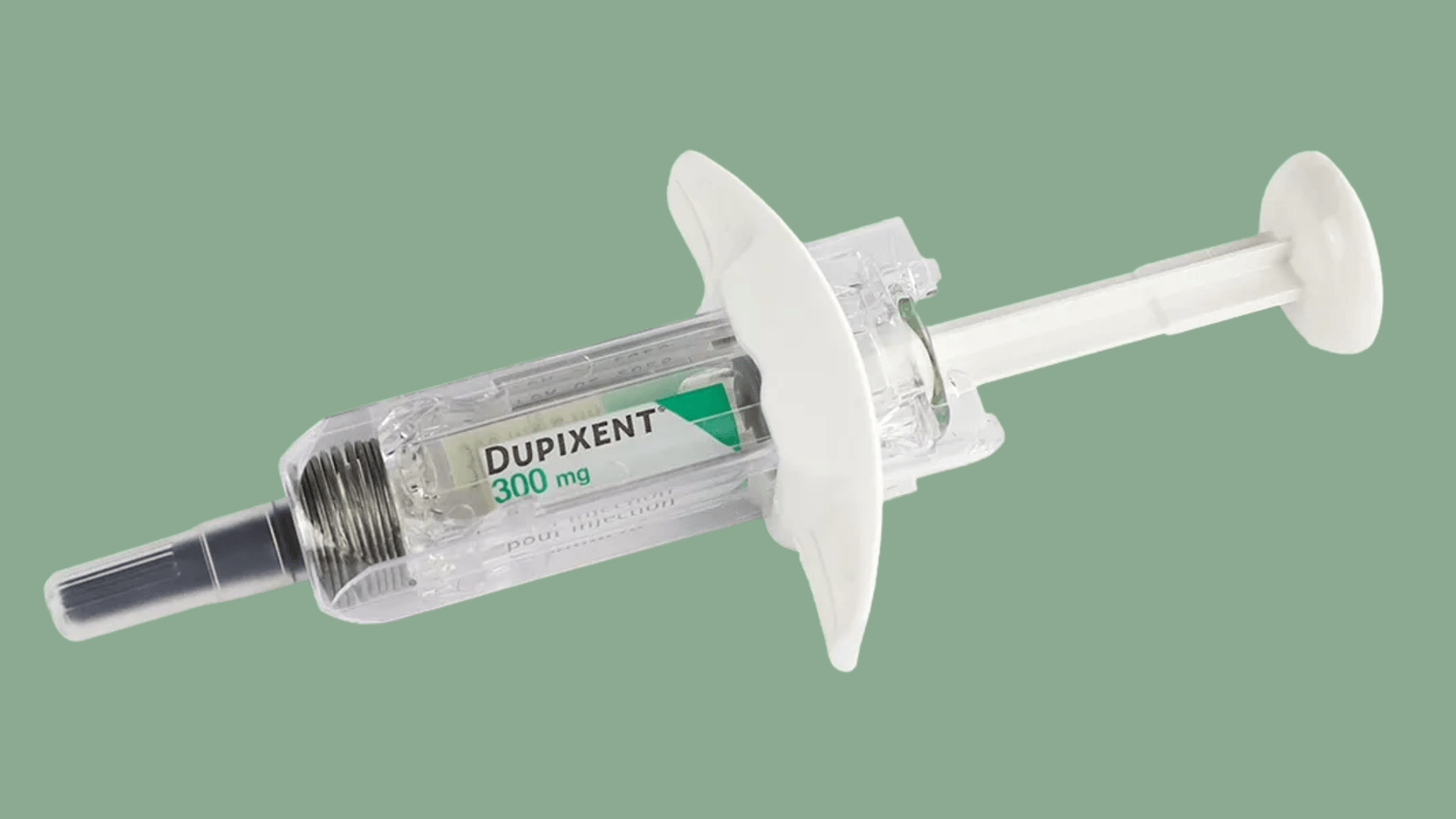
Dupixent (dupilumab) is a biologic medication that specifically targets the Type 2 / Th2 inflammatory pathway.
It works by blocking the receptors for IL-4 and IL-13, the major cytokines driving inflammation in eczema.
In simpler terms:
Dupixent helps quiet down the overactive pathway that causes itching, dryness, and inflammation.
This allows the skin barrier to repair itself, reduces itch signals, and decreases flare-ups.
But it’s important to remember:
Dupixent doesn’t treat every pathway—only the Th2 inflammatory pathway.
That means:
It doesn’t fix microbiome imbalance on its own
It doesn’t address stress-related inflammation
It doesn’t replace skincare
It doesn’t replace lifestyle and trigger identification
This is why some people still need moisturizers, routines, or dietary changes.
Why Understanding the Pathways Matters
Because eczema is multi-pathway, different people flare for different reasons.
Two people may both have eczema—but one may flare from food, another from stress, another from microbes, and another from fragrance.
When you understand the pathways, you can finally connect the dots:
Why a flare happens
Why a treatment helps
Why some medications work for you, and others don’t
Why lifestyle changes still matter
This knowledge gives you back a sense of control.
The Bottom Line
Eczema isn’t random—your body is reacting through specific inflammatory pathways.
Understanding these pathways helps you:
Make sense of your flares
Choose treatments that align with your needs
Reduce inflammation naturally
Feel more empowered, not overwhelmed
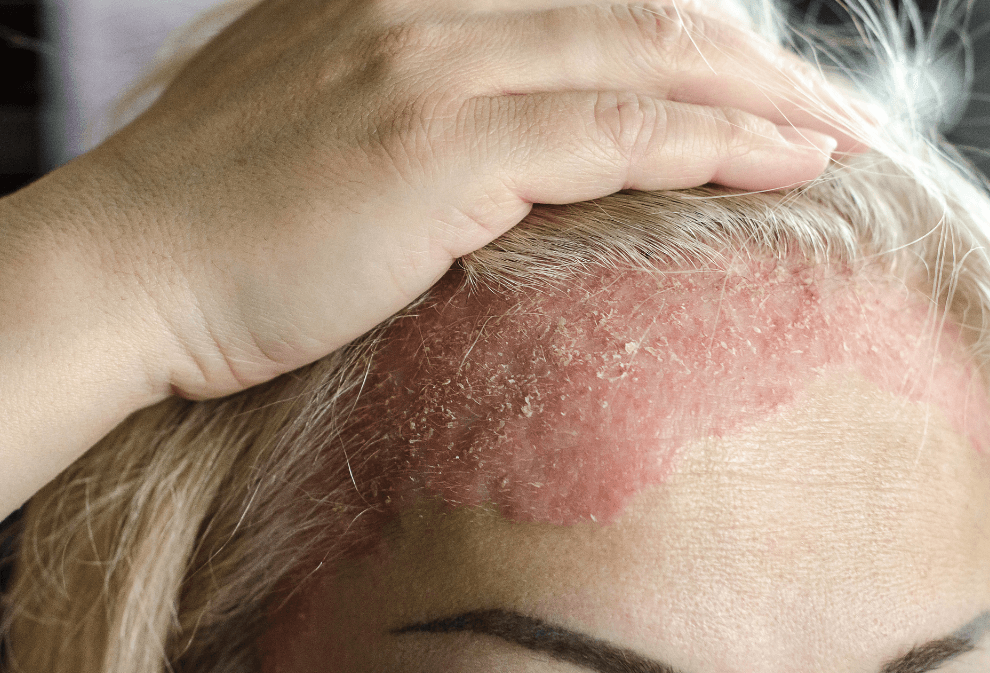
Medications like Dupixent can be incredibly helpful for many, but they work best when combined with:
Skin Barrier Support
Microbiome Support
Trigger Awareness
Anti-Inflammatory Habits
Understanding Your Skin’s Unique Signals
Because at the end of the day, your skin is always communicating with you.
The more you understand its language, the calmer and more predictable your eczema can become.
Calm your skin, reclaim your comfort, and embrace a healthier, more balanced life.



Get in touch
Feel free to get in touch with us via email: support@theantiinflammatorymindset.com
TAIM | Privacy Policy | Terms and Conditions