
Is Your Skin Barrier Struggling? 7 Signs It's Time to Simplify
Your skincare routine might look perfect on paper.
A cleanser. A serum. An exfoliant. Maybe a retinoid. A moisturizer. And a few extras you added because someone online swore they were essential.
But what if your skin is getting more irritated instead of healthier?
If your skin suddenly feels tight, stings when you apply products, or seems to react to everything lately, it's worth taking a closer look at your skin barrier. And when the barrier is struggling, more product usually isn't the fix. Sometimes your skin needs less.
What the skin barrier actually does
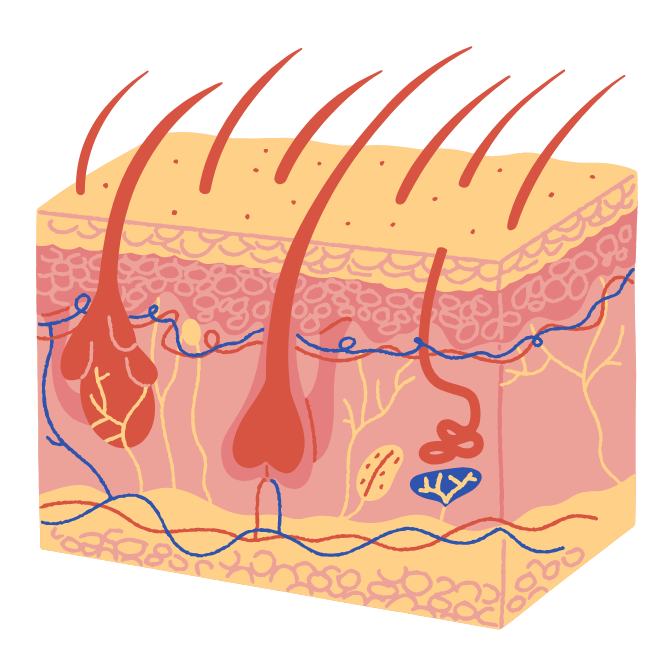
The outermost layer of your skin forms a protective boundary between your body and everything around it. Its main job is keeping water in while keeping irritants and environmental stress out.
A healthy barrier doesn't mean your skin never flares, breaks out, or gets irritated. It means that when barrier function is compromised, skin tends to become more dry, sensitive, and reactive than usual. This comes up constantly in eczema conversations, but it isn't exclusive to eczema. Anyone can disrupt their barrier through over-exfoliating, harsh products, aggressive cleansing, or simply asking more of their skin than it can handle.
7 signs your barrier may be struggling
Your skin feels tight after cleansing. That squeaky-clean feeling isn't proof your cleanser is working. More often, it's a sign your skin is being stripped further than it needs.
Products that used to feel fine suddenly sting. A moisturizer that's always felt soothing starts feeling uncomfortable. One product changing on you doesn't necessarily mean barrier damage, but if several products start causing discomfort around the same time, it's worth a closer look at your routine.
You're dealing with persistent dryness or flaking. Dryness alone doesn't equal barrier damage, but ongoing flaking and roughness can be a sign your skin needs support, not another exfoliant. Reaching for something stronger to "get rid of the flakes" usually makes the cycle worse.
Your skin seems to react to everything lately. Almost every new product causes redness, itching, or burning. The instinct is to keep hunting for the one perfect product. The better move is often to stop adding and start simplifying. Your skin may not need another active ingredient. It may need a break from irritation altogether.
You're noticing more redness than usual. Redness has plenty of causes, from eczema to rosacea to sun exposure, so it doesn't automatically point to barrier damage. But when it shows up alongside dryness, stinging, or tightness, your routine is worth examining.
Your routine has quietly become too much. It's rarely one product causing the problem. It's the stack: an active-ingredient cleanser, an exfoliating acid, a retinoid, a vitamin C serum, a treatment mask, and then another active because your skin still isn't "clear." Each step might be reasonable on its own. Together, it can be more than your skin can handle at once.
Your skin isn't bouncing back the way it used to. Healthy skin isn't perfectly calm all the time. You'll get the occasional pimple, a dry patch after a weather change, a bit of temporary irritation. The concern is when skin stays irritated and stops returning to its usual baseline. That's often a sign something needs to change.

What actually disrupts the barrier
There's rarely one single cause. Common contributors include over-cleansing, very hot water, frequent exfoliation, stacking multiple actives, harsh products, excessive friction, dry air, sun exposure, and certain skin conditions. Sensitivity to ingredients also varies from person to person, which is exactly why copying someone else's routine isn't always a good strategy.
Do you need to stop everything?
Not necessarily, and this is where barrier advice tends to get oversimplified. You don't need to toss every active you own, and not every skin concern traces back to a damaged barrier.
Instead, look at your timeline. Did you recently add something new? Increased how often you're using an active? Started exfoliating more? Does your cleanser leave skin feeling tight? Have several potentially irritating products stacked up in your routine? Has the weather shifted? Tracing back what changed usually tells you more than simply deciding your skin is "damaged."
A simpler routine can help
A simpler routine can help
If your skin has been feeling increasingly reactive, going back to basics for a while can give it room to recover. That typically means gentle cleansing without excessive washing, a moisturizer your skin actually tolerates used consistently, daily sun protection, and fewer unnecessary actives until things settle. The goal isn't the most impressive-looking routine. It's a routine your skin can actually tolerate.
If your skin has been feeling increasingly reactive, going back to basics for a while can give it room to recover. That typically means gentle cleansing without excessive washing, a moisturizer your skin actually tolerates used consistently, daily sun protection, and fewer unnecessary actives until things settle. The goal isn't the most impressive-looking routine. It's a routine your skin can actually tolerate.

This isn't just an eczema conversation
Barrier support comes up constantly around eczema, for good reason. But being gentle with skin matters well beyond it. Someone with rosacea is often dealing with skin that's easily irritated. Someone managing acne may be tempted to over-cleanse or over-exfoliate. Someone with psoriasis may have dry, scaling areas that need thoughtful care. And someone with no diagnosis at all can still irritate their skin with a routine that's simply too aggressive.
The point isn't to treat all of these the same way. It's recognizing that how you care for skin shapes how it responds, regardless of diagnosis.
Your skin doesn't need fixing every single day
The skincare industry has a way of making it feel like something always needs correcting: a wrinkle, a pore, a dark spot, some texture, a bit of redness. And when skin doesn't cooperate, the instinct is to add another product.
But healthy skin isn't about constant correction. Sometimes it looks like a routine that's simple, consistent, and a little boring. Boring, in this case, is a good sign.

When to get professional guidance
Not every case of redness, dryness, or sensitivity is a barrier issue. Persistent redness, severe itching, painful skin, significant swelling, oozing, symptoms that are rapidly worsening, or a rash that won't improve deserves a professional look. The goal isn't to diagnose yourself off a checklist. It's to notice what your skin may be telling you so you can make a more informed next move.
When to get professional guidance
Not every case of redness, dryness, or sensitivity is a barrier issue. Persistent redness, severe itching, painful skin, significant swelling, oozing, symptoms that are rapidly worsening, or a rash that won't improve deserves a professional look. The goal isn't to diagnose yourself off a checklist. It's to notice what your skin may be telling you so you can make a more informed next move.
Your skin barrier isn't something to obsess over, but it is worth respecting. If your skin turns tight, dry, stinging, or unusually reactive, resist the urge to immediately add another treatment. Pause. Look at your routine. Think about what's changed recently. Your skin may need support more than correction.
More isn't always better. Sometimes simpler is smarter.
Key Takeaways
The skin barrier protects skin and helps reduce water loss
Barrier disruption can contribute to dryness, sensitivity, and reactivity, though these can have other causes too
Over-cleansing, over-exfoliating, and stacking too many actives can all contribute to irritation
Simplifying your routine can help when skin feels overwhelmed
Barrier support matters beyond eczema and applies to any sensitive or reactive skin
Persistent or concerning symptoms deserve evaluation by a qualified healthcare professional
This article is for educational purposes only and isn't a substitute for individualized medical advice or diagnosis.

Calm your skin, reclaim your comfort, and embrace a healthier, more balanced life.



Get in touch
Feel free to get in touch with us via email: support@theantiinflammatorymindset.com
TAIM | Privacy Policy | Terms and Conditions