Inflammation Isn't Just an Eczema Thing (Here's What Else It Explains)
If you've spent any time trying to understand your skin, you've heard the word "inflammation" more times than you can count.
It usually comes up around eczema, especially when you're dealing with redness, itching, dryness, or a flare that won't quit. But eczema isn't the only condition where inflammation is running the show.
Rosacea, acne, and psoriasis all involve inflammatory processes too. They can look nothing alike on the surface, but underneath, inflammation is often part of what's happening. Understanding that doesn't mean these conditions all share one cause or one fix. It just means the picture is bigger than "eczema equals inflammation, everything else is separate."
What inflammation actually is...
Inflammation is your body's built-in defense system at work.
When your immune system senses a threat or detects tissue injury, it sends out signals to coordinate healing and protection. In its acute form, this is useful and temporary, like the redness and swelling that shows up around a minor cut while your body repairs it.
But inflammation doesn't always stay short-lived. It can become persistent or dysregulated, and when that happens in the skin, it doesn't look the same for everyone. One person might notice redness and itching. Another might deal with bumps, scaling, burning, or ongoing irritation.

The Same Process, Four Very Different Faces
Two people can both be dealing with inflammation and still have skin that looks nothing alike.

Eczema involves skin barrier dysfunction alongside immune dysregulation, which is why the skin often ends up dry, itchy, and highly reactive. Supporting that barrier tends to be central to managing it.
Rosacea shows up as persistent facial redness, flushing, visible blood vessels, bumps, or a burning and stinging sensation. Heat, stress, skincare products, and other environmental factors can play a role, though triggers are different for everyone.
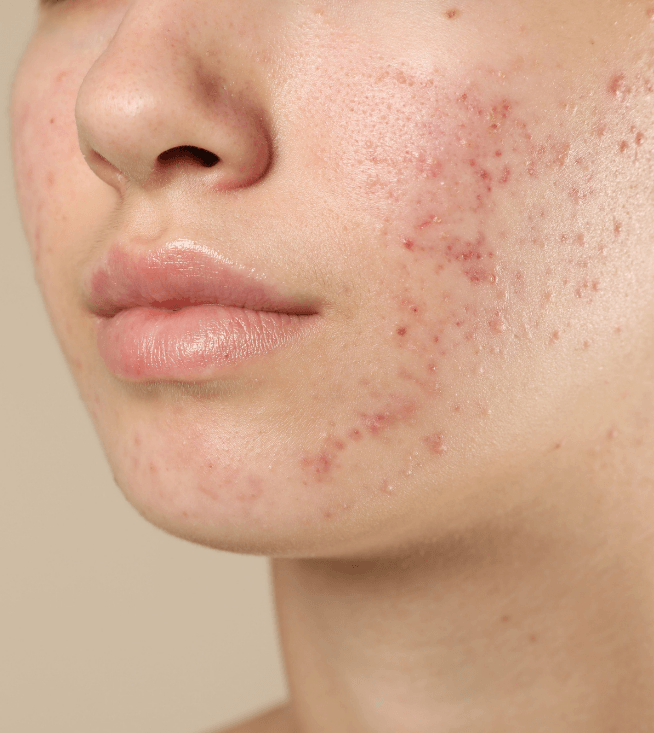
Acne isn't a hygiene issue. It involves clogged follicles, changes in sebum, follicular changes, and inflammation working together, which is exactly why scrubbing harder or trying to "dry out" the skin usually backfires.
Psoriasis is a chronic inflammatory condition driven by an overactive immune response, producing well-defined, scaly plaques that can show up almost anywhere on the body.
Different conditions. Different mechanisms. Different presentations. But inflammation runs through all four.
Does that mean they should all be treated the same way?
No, and this is the part that's easy to get wrong.
It's tempting to hear "eczema, acne, rosacea, and psoriasis all involve inflammation" and assume one approach should work for all of them. It shouldn't. A treatment that helps one condition can do very little for another, and even two people with the exact same diagnosis can need completely different plans based on their symptoms and triggers.
Inflammation is one piece of the puzzle, not the whole picture.

Your Skin Barrier Is Part Of That Puzzle
Your skin barrier keeps moisture in and irritants out. When it's not functioning well, skin tends to feel more vulnerable, whether that's dryness, tightness, sensitivity, or reactivity.
This matters most obviously with eczema, but barrier health is worth paying attention to any time skin feels sensitive or reactive, regardless of diagnosis. That doesn't mean every flare comes down to a "damaged barrier." It means your skin's protective function deserves attention, not just the symptoms sitting on top of it.
Your Environment Plays A Role Too
Skin doesn't exist in a vacuum. Temperature shifts, humidity, sweat, friction, and irritating products can all change how your skin behaves.
For some people, a season change is enough to notice a difference. For others, the connection is harder to pin down. That's exactly why tracking patterns over time is often more useful than hunting for one universal trigger.

And So Does Your Lifestyle
Conversations about inflammatory skin tend to jump straight to products. But skin health is shaped by more than what you're putting on it.
Sleep, stress, nutrition, and daily habits are all part of the picture. That doesn't mean a specific food is "causing" your eczema, or that cutting out a food group will cure acne, or that an extreme detox is the answer every time your skin acts up. Your skin deserves more nuance than that.

Instead of asking "what's the one thing causing this," try asking:
What patterns am I noticing?
What makes my symptoms better or worse?
How is my skin responding to my current routine?
Are there environmental factors I keep overlooking?
Am I supporting my skin barrier?
What does my overall lifestyle actually look like?
Do I need professional guidance to make sense of this?
Inflammation Isn't The Enemy
This might be the most important shift in thinking.
Inflammation itself isn't inherently bad. Your immune system needs it to protect you and respond to injury. The problem is when it becomes excessive, persistent, or dysregulated.
So instead of "I need to eliminate all inflammation," a more useful mindset is "I want to understand what's driving my symptoms and support my skin appropriately." That single shift changes how you approach your skin, from chasing the next product to actually understanding what's underneath.
Your Skin Is Giving You Information
Redness, itching, burning, dryness, breakouts, scaling, and sensitivity aren't random. They're signals that something is happening. They just don't always tell you exactly why on their own.
That's where individualized care comes in. Your diagnosis, your symptoms, your history, your environment, and your daily habits all matter, and sometimes getting the right answer means looking past the surface.
The Bigger Picture
If you've been following along for eczema content, this conversation isn't replacing that. Eczema is still very much part of what we talk about here.
But inflammatory skin health is bigger than any single condition. Understanding how inflammation, the skin barrier, the immune system, environment, and lifestyle all connect gives us a more complete conversation about skin health overall, because your skin deserves more than a one-size-fits-all answer.
If your symptoms are persistent, painful, rapidly changing, or otherwise concerning, working with a qualified healthcare professional for an accurate diagnosis and individualized plan is always the right next step.
Key Takeaways
Inflammation plays a role in many skin conditions, not just eczema
Eczema, rosacea, acne, and psoriasis work through different mechanisms and shouldn't be treated identically
Skin barrier function matters for sensitive or reactive skin, whatever the diagnosis
Environmental and lifestyle factors influence symptoms differently for everyone
There's no single universal trigger or fix for inflammatory skin
Looking at patterns and taking an individualized approach beats chasing quick fixes
Calm your skin, reclaim your comfort, and embrace a healthier, more balanced life.



Get in touch
Feel free to get in touch with us via email: support@theantiinflammatorymindset.com
TAIM | Privacy Policy | Terms and Conditions